

“It’s just stress.” “You’ll get used to it.” “There’s nothing you can do.” If you’ve heard any of that about ringing in the ears, you may have walked away more discouraged than informed.
Tinnitus, the medical term for hearing a sound that has no outside source, is common. The NIDCD notes that surveys estimate 10% to 25% of adults have it, and the real picture is both more hopeful and more nuanced than those one-liners suggest.
This guide takes the usual advice apart one myth at a time. You’ll also see how to prepare for a doctor’s visit and what research says so far about neurofeedback, a gentle, non-invasive form of brain training.
What’s Really Happening When Your Ears Ring
Tinnitus feels like an ear problem, but a leading theory points to the brain. The NIDCD explains that damage in the inner ear can change the signals sent to the parts of the brain that process sound, so the phantom sound may actually be generated in the brain’s auditory cortex. Studies also show that some people with tinnitus have changes in brain regions tied to attention and emotion.
That may help explain why tinnitus can affect mood, sleep and concentration, not just hearing.
Five Myths About Ringing in the Ears
Myth: It always means something is seriously wrong
Fact: The NIDCD says tinnitus is only rarely associated with a serious medical problem, and it is usually not severe enough to interfere with daily life. Some signs do deserve prompt attention, which you’ll find in the appointment section below.
Myth: It only happens to people with hearing loss
Fact: Most people with tinnitus have some degree of hearing loss, but some people with hearing loss never develop it, and some people develop tinnitus for no known reason. Noise exposure, certain medications, earwax, ear infections and head or neck injuries can all play a part. Cleveland Clinic experts add that long stretches around power tools and lawn equipment can harm hearing, and that a jaw joint problem can sometimes be involved.
Myth: There’s nothing you can do about it
Fact: There is currently no cure, but there are real ways to lessen its impact. When tinnitus has an underlying cause, such as earwax, treating that cause can eliminate or greatly reduce the sound. For persistent tinnitus, the NIDCD lists sound therapy, hearing aids for people with hearing loss, and behavioral approaches such as counseling and cognitive behavioral therapy (CBT), which helps you change how you respond to the sound.
Myth: The right supplement will fix it
Fact: The NIDCD cautions that vitamins, herbal extracts and dietary supplements commonly advertised as cures have not been proven effective.

Myth: A quiet room is the best place for it
Fact: Gentle background sound often helps. A bedside sound generator, a phone app, a fan or a radio can make tinnitus less noticeable, and the NIDCD notes that for mild tinnitus this might be all you need to fall asleep. Our earlier post on neurofeedback as a solution for better sleep covers the sleep side of the story.
Your Doctor’s Visit, Step by Step
A little preparation makes the appointment more useful. According to the NIDCD, the path usually runs like this:
- Start with your primary care doctor. They can check for earwax or fluid from an ear infection and review your medical history and medications.
- See an ear, nose and throat doctor (ENT) if referred. They’ll ask you to describe the sound and when it started, examine your head, neck and ears, and may order imaging, especially if the sound pulses.
- Visit an audiologist. This is a hearing specialist who can measure your hearing and evaluate your tinnitus.
Bring a list of your medications and a few notes on when the ringing started and what seems to make it better or worse. Never stop a prescribed medication on your own.
Don’t wait for an appointment if you have sudden hearing loss, severe dizziness, facial weakness, ringing after a head injury, or a pulsing sound that beats in time with your heartbeat. Ringing in only one ear is also worth getting checked.

Where Brain Training May Fit
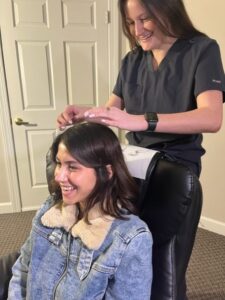
Because the brain seems to play a role, researchers have explored neurofeedback. Picture a mirror for your brainwaves: small sensors on the scalp read your brain’s natural electrical rhythms, and the show or music you’re watching responds in real time, so your brain can practice steadier patterns.
The research so far is early. A 2017 review of neurofeedback studies for chronic tinnitus noted that no treatment has yet been found that completely relieves chronic tinnitus, said neurofeedback may be a suitable alternative, and called for further research and shared guidelines. A 2023 systematic review of five studies found that all of them reported reduced tinnitus perception afterward, but the authors could not be certain about its effectiveness because the approach is still being developed and the studies varied.
The fair summary: encouraging, small and unproven. Neurofeedback is not a cure for tinnitus, it can’t promise results, and it is meant to work alongside a hearing and medical evaluation, never instead of one.
At MyBrainDr, we offer neurofeedback for tinnitus for women in Raleigh and the surrounding area who want to explore a drug-free option with their doctor’s knowledge.
What to Expect at MyBrainDr
We have offices in Raleigh and Cary and serve women across the Research Triangle, including Durham, Chapel Hill, Apex and Wake Forest. A first visit tends to unfold like this.
It begins with a free, no-obligation conversation. Our team goes over your health history and current treatments and talks honestly about whether neurofeedback could suit you. If you decide to continue, a quantitative EEG, or brain map, comes next: a non-invasive recording of electrical activity across your brain that takes roughly 20 to 30 minutes. The map helps our team design a personalized training plan and schedule.
Training sessions then run about 30 minutes. You relax and watch a show or movie, or listen to music, while sensors track your brainwaves. When the software notices patterns outside the target range, the picture or sound briefly dims or fades, and your brain gradually learns from the feedback.
How many sessions you’ll need varies from person to person. Side effects are rare, though some people feel briefly tired or have trouble sleeping afterward, and training can usually be adjusted. You don’t have to stop your medications to do neurofeedback, and at-home training is available after an in-office brain scan.
Questions People Ask
Can ringing in the ears go away on its own?
Sometimes. The NIDCD notes that tinnitus may improve or even go away over time, but in some cases it gets worse. When it lasts three months or longer it’s considered chronic. If an underlying cause such as earwax is found and treated, symptoms may improve.
Can neurofeedback cure tinnitus?
No. Neurofeedback is not a cure for tinnitus or any other condition. It is a non-invasive training approach designed to support healthier brain regulation. Early research is promising but limited, with small studies and no standard protocols, so results vary from person to person. It should complement, not replace, an ear and hearing evaluation.
Is neurofeedback covered by insurance?
Usually not. Most insurers don’t cover brain mapping or neurofeedback training for most brain-related conditions. FSA and HSA accounts may be used, and we offer interest-free and low-cost payment options. Ask our team about current rates at your free evaluation, before you commit to anything.
Getting Tinnitus Back in the Background
For many people, the goal isn’t total silence. It’s getting tinnitus to a place where it no longer runs the day. Start with a visit to your physician, protect your hearing and sleep, and give yourself credit for taking it seriously.
If you’re in Raleigh or nearby and want to talk through whether neurofeedback belongs in your plan, Dr. Robert Baric and the rest of our team at MyBrainDr would be glad to meet you. Book your free in-person evaluation at MyBrainDr and bring your questions.
MyBrainDr, Two Locations
Six Forks in Raleigh 8388 Six Forks Rd. Suite 101 Raleigh, NC 27615
Cornerstone in Cary 270 Cornerstone Dr STE 101 Cary, NC 27519
Phone: (919) 721-4800
Office Hours: 8388 Six Forks Rd. 101, Raleigh 27615
M: CLOSED T: 7:00am – 6:00pm W: 11:00am – 6:00pm Th: 7:00am – 6:00pm F: 11:00am – 6:00pm Sat: 9:00am – 1:00pm
Office Hours: 270 Cornerstone Dr. 101, Cary 27519
M: 10:00am – 6:00pm T: 7:00am – 6:00pm W: 10:00am – 6:00pm Th: 7:00am – 6:00pm F: CLOSED Sat: 8:00am – 12:00pm
Disclaimer: This article is for general educational purposes only and is not medical advice. Neurofeedback does not cure or treat any condition, does not replace medical care, and results vary from person to person. Research on neurofeedback for tinnitus is still evolving. Always talk with your physician about your symptoms and before changing any treatment.


