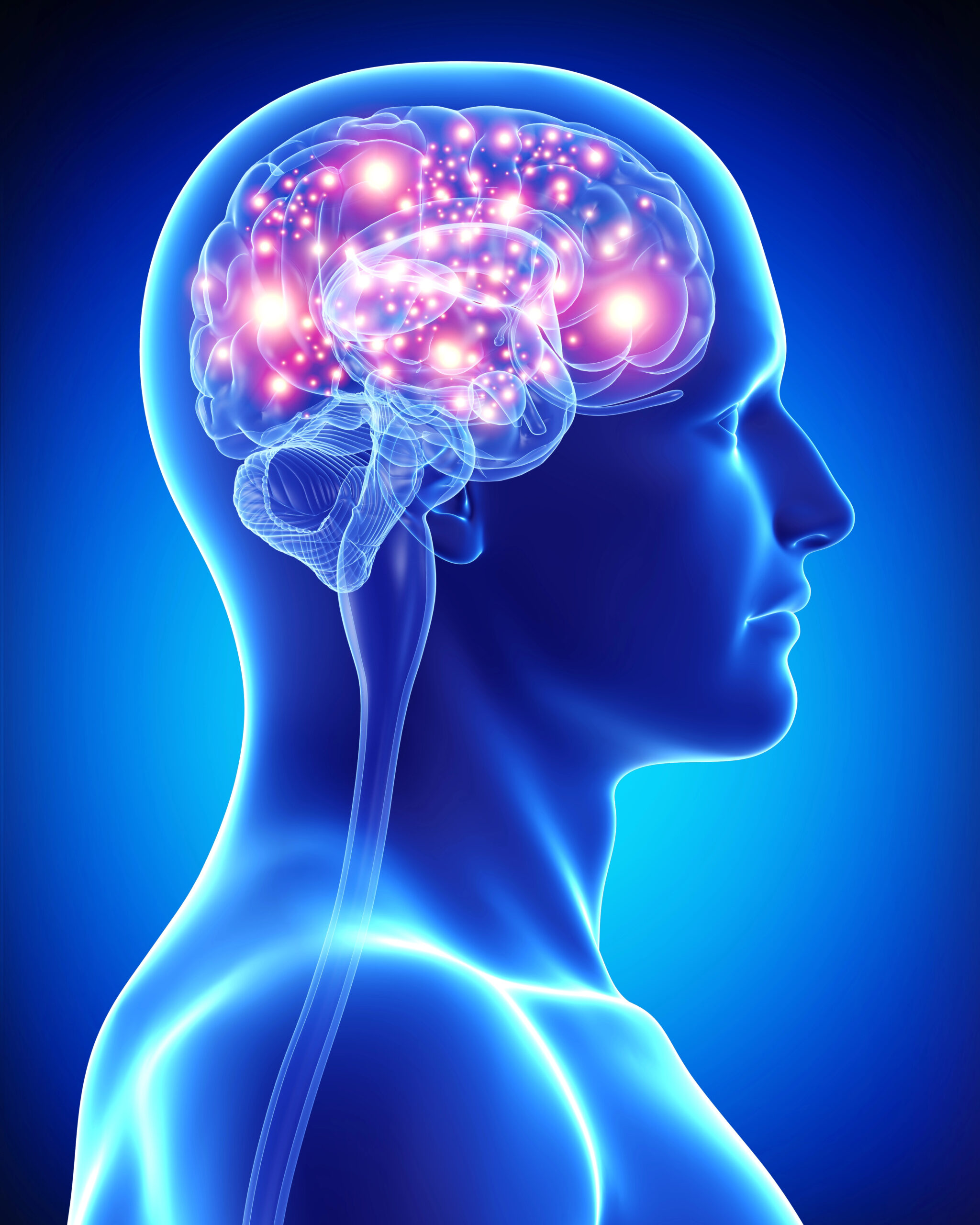
Picture a weather map: swirls of color showing where the pressure runs high and where it runs low. A qEEG brain map works a little like that, except the weather is your brain’s electrical activity.
If a neurofeedback evaluation is on your calendar, you may be wondering what a qEEG brain map involves, whether it hurts and what it can actually tell you. Quantitative EEG, or qEEG, is a type of analysis in which digital brainwave recordings are processed with mathematical algorithms. Here’s a walkthrough from start to finish, including what a brain map can’t do, so you can arrive informed and ask better questions.
Brain Map Basics in One Minute
Your brain’s cells communicate with tiny electrical signals. An EEG (electroencephalogram) picks those signals up through small sensors placed on the scalp, and the recording shows brainwaves, the natural rhythms of that electrical activity. A qEEG goes one step further: software analyzes the recording and displays the results as colorful maps and numbers, which is where the term “brain map” comes from.
It’s non-invasive. The sensors listen to your brain’s activity; nothing goes into your body.
Your Brain Map, Start to Finish
Before you arrive
Bring a list of your current medications and any questions you have. At MyBrainDR, the brain map comes after a free evaluation, where our team goes over your health history and current treatments and talks with you about whether neurofeedback could suit you.
Getting set up
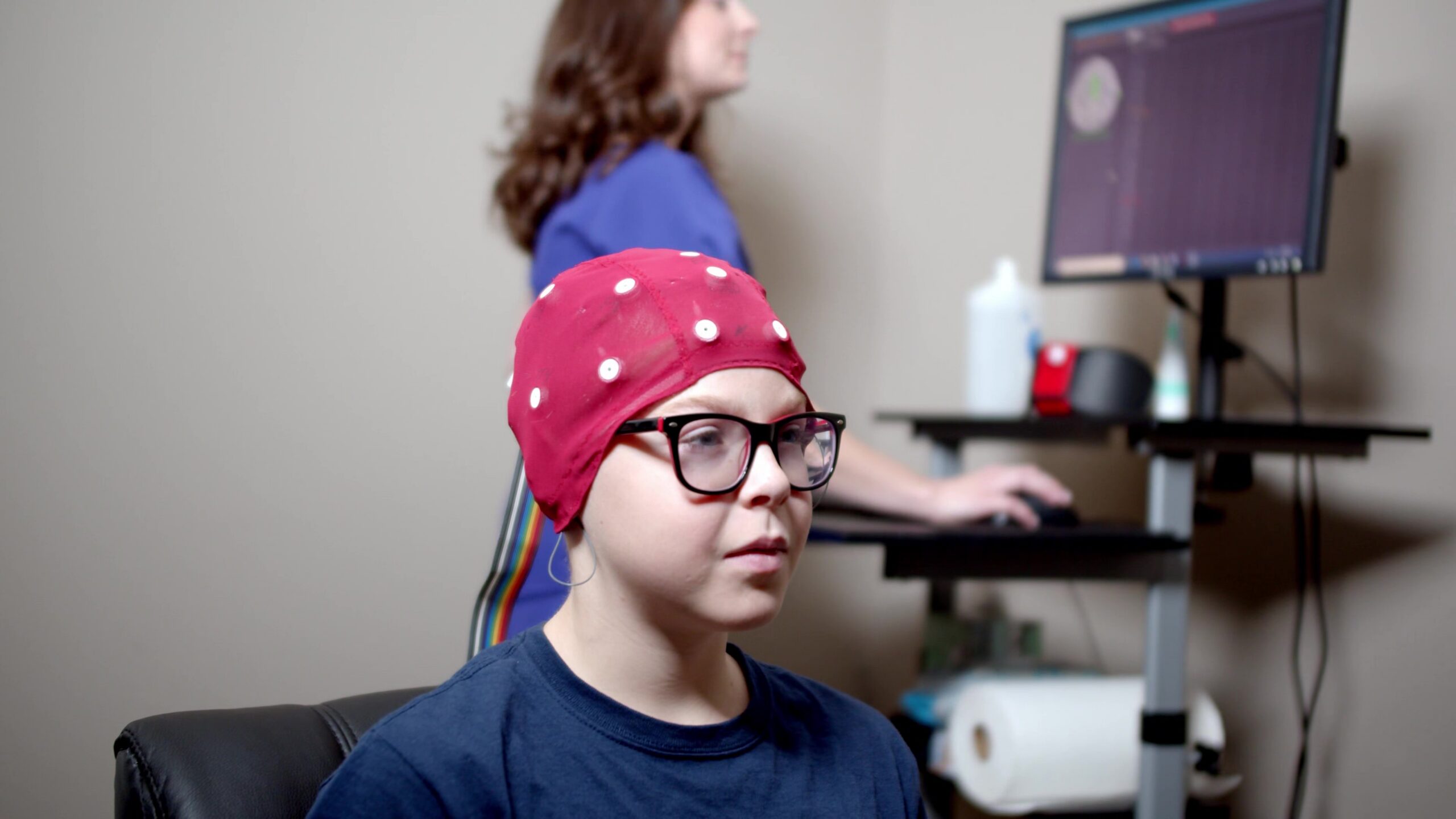
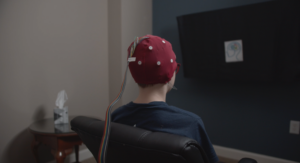
Sensors are placed on your scalp. You sit comfortably; there’s nothing to do but relax.
The recording
We record your brainwaves for about two minutes with your eyes open and about two minutes with your eyes closed. The initial scan takes roughly 20 to 30 minutes.
Afterward
The data is analyzed and often compared with a reference database of healthy brain activity. That comparison helps our team spot patterns and build a personalized neurofeedback training plan for you.
qEEG vs. a Regular EEG
| Conventional EEG | qEEG | |
|---|---|---|
| What it records | Electrical activity through sensors on the scalp | The same kind of recording |
| How it’s read | Visually, by a specialist | With added mathematical analysis, such as frequency bands, regional comparisons and connectivity |
| Commonly used for | Looking for problems such as seizure activity | Considered complementary to conventional EEG in certain situations by neurology professional bodies |
| What it produces | Tracings of brainwaves | Maps and numbers, often compared with a reference database |
A review of the clinical uses of qEEG notes that the American Academy of Neurology and the American Clinical Neurophysiology Society say qEEG may be complementary to conventional EEG in certain situations. Another review of practical qEEG applications describes how it can analyze specific frequency bands, signal complexity, connections between brain regions and network patterns. You can read more about the different types of brainwaves in our overview of primary brainwaves.
What a Brain Map Can’t Do
This part matters, because it’s where it’s easy to overpromise.
- It can’t diagnose a condition on its own. The first review above notes that for conditions such as post-concussion syndrome, mild traumatic brain injury, attention deficit disorder and depression, qEEG has been used in experimental studies without established evidence for routine clinical practice.
- It’s one piece of the puzzle. A brain map is best understood alongside your history, your symptoms and any medical care you’re receiving.
What to Expect at MyBrainDR
We have offices in Raleigh and Cary and serve women across the Research Triangle, including Durham, Chapel Hill, Apex and Wake Forest. Once your brain map is done, the road ahead looks like this.
Your map helps our team build a customized training plan and session schedule. Sessions typically run about 30 minutes: you relax and watch a show or movie, or listen to music you choose, while sensors track your brainwaves. When the software detects patterns outside the target range, the video or music briefly dims or fades, and your brain gradually learns from that feedback.
The number of sessions varies from person to person. Side effects are rare, though some people feel briefly tired or have trouble sleeping afterward, and training can usually be adjusted. You don’t have to stop your medications to do neurofeedback, and at-home training is available after an in-office brain scan. The first step is a free in-person evaluation, where you can ask anything you like.
qEEG Brain Map FAQs
How long does a brain map take?
At MyBrainDR, the initial scan takes roughly 20 to 30 minutes. The recording itself includes about two minutes with your eyes open and about two minutes with your eyes closed. Your visit also includes time to talk with our team about your health history and goals, so it’s worth planning a little extra time.
Does a qEEG brain map hurt?
No. It is a non-invasive recording, with sensors on the scalp that read brainwaves rather than sending electricity into your head. Most people simply sit and relax while it’s done. If anything feels uncomfortable, tell our team and they can help.
Can a qEEG diagnose a condition?
No. A qEEG brain map is not a diagnostic test on its own. Professional bodies describe it as complementary to a conventional EEG in limited situations, and its role for conditions like ADHD, depression or concussion is still considered experimental. We use it to help personalize neurofeedback training, not to replace a medical diagnosis.
Is a brain map covered by insurance?
Usually not. Most insurers don’t cover brain mapping or neurofeedback training for most brain-related conditions. FSA and HSA accounts may be used, and we offer interest-free and low-cost payment options. Ask our team about current rates at your free evaluation, before you commit to anything.
Walk In Curious, Not Nervous
A qEEG brain map is a non-invasive way to look at patterns in your brain’s electrical activity, and it can help guide a personalized neurofeedback plan. It isn’t a diagnosis or a cure-all, and a good provider will tell you that up front.
If you live in Raleigh or nearby, Dr. Robert Baric and the rest of our team at MyBrainDR would be glad to meet you. Book your free in-person evaluation at MyBrainDR and see whether a brain map makes sense for you.
MyBrainDR, Two Locations
Six Forks in Raleigh 8388 Six Forks Rd. Suite 101 Raleigh, NC 27615
Cornerstone in Cary 270 Cornerstone Dr STE 101 Cary, NC 27519
Phone: (919) 721-4800
Office Hours: 8388 Six Forks Rd. 101, Raleigh 27615
M: CLOSED T: 7:00am – 6:00pm W: 11:00am – 6:00pm Th: 7:00am – 6:00pm F: 11:00am – 6:00pm Sat: 9:00am – 1:00pm
Office Hours: 270 Cornerstone Dr. 101, Cary 27519
M: 10:00am – 6:00pm T: 7:00am – 6:00pm W: 10:00am – 6:00pm Th: 7:00am – 6:00pm F: CLOSED Sat: 8:00am – 12:00pm
Disclaimer: This article is for general educational purposes only and is not medical advice. A qEEG brain map is not a diagnostic test on its own, neurofeedback does not cure or treat any condition, and neither replaces medical care. Results vary from person to person. Always talk with your physician about your symptoms and before changing any treatment.